Love Letter – A Love Letter to My Enemy
By Yue I have been away for two months, traveling from old places to new places, spending time with family, old ones and young ones. I celebrated my birthday in…

In a world that rarely slows down, resilience has become more than just a helpful trait it is essential. Life does not ask for permission before it changes us. It interrupts, it takes, it reshapes. In those moments, resilience is what allows us to continue. It is the quiet, steady strength that helps us move through grief, uncertainty, and change, even when we feel unprepared.
Resilience is often described as the ability to “bounce back,” but that definition feels incomplete. True resilience is not about returning to who you were before hardship, it is about becoming someone new because of it. It is built through emotional awareness, perspective, and connection. It is the ability to sit with discomfort, to process rather than avoid, and to slowly find meaning even in the most difficult experiences.
For me, resilience was not something I always understood. It was something I had to learn through one of the most difficult experiences of my life, the loss of my grandmother.
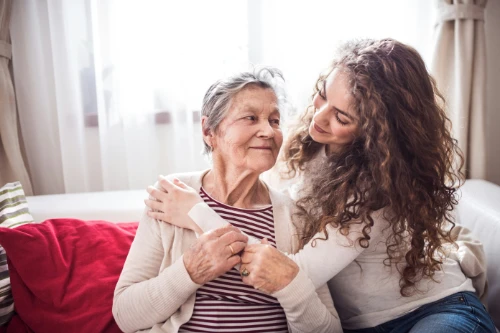
My grandmother was more than a relative, she was a grounding presence in my life. She carried a quiet strength, a warmth that made everything feel safe, and a way of being that felt steady no matter what was happening around her. Over time, she became ill with a chronic heart condition that slowly weakened her. Watching her health decline was painful in a different way than loss itself, it was a gradual unfolding, where each visit felt more fragile than the last.
In the beginning, I held onto hope. I told myself she would recover, that things would stabilize. But as her condition worsened, hope slowly mixed with fear. I began to notice small changes, the way she spoke more softly, the way her energy faded, the way time with her felt more limited. There was a quiet anticipatory grief, even before she passed, a feeling I didn’t fully understand at the time.
When she eventually passed, the grief did not arrive all at once. At first, there was shock, a kind of emotional numbness that made everything feel distant and unreal. I continued with my daily routines, speaking to people, showing up where I needed to, but inside, there was a heaviness I could not explain.
As the days went on, that numbness gave way to sadness. It showed up in waves, unexpected and deeply personal. Simple moments would trigger it: a memory, a familiar phrase she used to say, even the quiet of certain times of day. I found myself replaying moments with her, wishing I could return to them, questioning whether I had fully appreciated the time we had.
My mind moved constantly between past and present. I felt stuck, holding onto what was while trying to accept what is. There was also a subtle sense of guilt, a feeling that I could have done more, said more, been more present. These thoughts were not constant, but when they came, they were heavy.
I also changed in ways I didn’t expect. I became quieter, more introspective. At times, I withdrew not because I didn’t care about others, but because I didn’t have the emotional energy to explain what I was feeling. My focus shifted. Things that once felt urgent lost their importance, while emotional experiences felt deeper and more intense.
At a certain point, I realized I could not continue carrying my grief in the same way. I needed a way to process it, not just move through it.
That is when I turned to meditation.
At first, meditation was uncomfortable. Sitting in silence meant sitting with everything I had been trying to manage or avoid. My thoughts felt louder. My grief felt closer. There were moments I wanted to stop, to distract myself instead of facing what was coming up.
But slowly, something began to shift.
Meditation became less about quieting my mind and more about observing it. I started to notice the patterns, how my mind replayed memories, how it held onto “what if” thoughts, how it resisted accepting the present moment. Instead of getting pulled into those thoughts, I began to create space around them.
In the beginning of my practice, my emotions felt overwhelming and constant. But over time, they began to change.
The grief softened not in intensity all at once, but in how it moved through me. Instead of feeling like something I was stuck inside, it became something that came and went. Waves instead of a constant state.
The confusion I once felt slowly turned into acceptance. Not a forced acceptance, but a gradual understanding that some things cannot be changed.
The tight grip I had on memories began to loosen. I didn’t forget them, but I no longer felt the same need to hold onto them so intensely.
Alongside the sadness, I began to experience moments of peace. At first, they were brief, a quiet breath, a moment of stillness. But over time, they grew. Meditation helped me understand that I could feel grief and still experience calm. That both could exist at the same time.
This process changed me in lasting ways.
I became more aware of my thoughts and less controlled by them. I developed patience with myself, understanding that healing is not linear. I also became more compassionate, grief opened my eyes to how much people carry silently.
Most importantly, I learned to let go of the illusion of control. Meditation helped me release the constant mental back-and-forth and return to the present moment. It gave me a sense of grounding that I had lost.
I also came to understand that resilience is not built alone. Sharing my experience with others, listening to their stories, and allowing connection to be part of my healing strengthened me in ways I didn’t expect.
Today, I see resilience differently. It is not about avoiding pain or appearing strong. It is about allowing yourself to feel deeply, to process honestly, and to continue forward, even in small steps.
Meditation did not take away my grief, but it transformed my relationship with it. It taught me how to sit with discomfort, how to observe my thoughts without being consumed by them, and how to find moments of peace even in the midst of loss.
Resilience, I have learned, is not about returning to who you once were. It is about growing into someone new, someone shaped by experience, grounded in awareness, and open to both pain and healing.
Because resilience is not about avoiding life’s hardships. It is about learning how to live fully, even with them and sometimes, because of them.
Times shown in America/New_York.
| Sun | Mon | Tue | Wed | Thu | Fri | Sat |
|---|---|---|---|---|---|---|
1Thursday, October 1 Latin Dance Fitness3:00 PM - 4:00 PM EDT | 2Friday, October 2 Mental Wellness8:00 PM - 9:00 PM EDT | 3Saturday, October 3 | ||||
4Sunday, October 4 | 5Monday, October 5 | 6Tuesday, October 6 Healing Through Art3:00 PM - 4:00 PM EDT | 7Wednesday, October 7 Healthy Living Tai Chi11:00 AM - 12:00 PM EDT | 8Thursday, October 8 Latin Dance Fitness3:00 PM - 4:00 PM EDT | 9Friday, October 9 Mental Wellness8:00 PM - 9:00 PM EDT | 10Saturday, October 10 World Mental Health Day 202610:00 AM - 11:00 AM EDT |
11Sunday, October 11 | 12Monday, October 12 | 13Tuesday, October 13 | 14Wednesday, October 14 Healthy Living Tai Chi11:00 AM - 12:00 PM EDT | 15Thursday, October 15 Latin Dance Fitness3:00 PM - 4:00 PM EDT | 16Friday, October 16 Mental Wellness8:00 PM - 9:00 PM EDT | 17Saturday, October 17 |
18Sunday, October 18 | 19Monday, October 19 | 20Tuesday, October 20 | 21Wednesday, October 21 Healthy Living Tai Chi11:00 AM - 12:00 PM EDT | 22Thursday, October 22 Latin Dance Fitness3:00 PM - 4:00 PM EDT | 23Friday, October 23 Mental Wellness8:00 PM - 9:00 PM EDT | 24Saturday, October 24 |
25Sunday, October 25 | 26Monday, October 26 | 27Tuesday, October 27 | 28Wednesday, October 28 Healthy Living Tai Chi11:00 AM - 12:00 PM EDT | 29Thursday, October 29 Latin Dance Fitness3:00 PM - 4:00 PM EDT | 30Friday, October 30 Mental Wellness8:00 PM - 9:00 PM EDT | 31Saturday, October 31 |
No classes scheduled in October 2026.